Poor sleep affects everything — mood, focus, immune function, and emotional resilience. If you still find yourself staring at the ceiling, crystals offer a gentle complement to your sleep routine. This guide covers nine calming stones, explains where to place them, and identifies high-energy crystals you should remove from the bedroom at night.
Which Crystals Help with Sleep?
The best crystals for sleep are amethyst, moonstone, selenite, lepidolite, labradorite, fluorite, howlite, smoky quartz, and blue lace agate. Amethyst quiets racing thoughts, lepidolite contains natural lithium for deep calm, and selenite clears anxious energy from your sleeping space. Together, these nine stones address the most common barriers to restful sleep.
The stone that works best for you depends on what keeps you awake. Below, we break down all nine options with specific placement advice.
1. Amethyst — For Quieting the Mind
Chakra: Third eye, crown Mohs Hardness: 7 Sleep benefit: Calms racing thoughts, eases overthinking, supports dream recall
Amethyst is the most widely recommended crystal for sleep. This purple quartz has been associated with rest since ancient Greece. Its connection to the third eye and crown chakras makes it effective for insomnia driven by an overactive mind — replaying the day, worrying about tomorrow, or cycling through to-do lists.
Amethyst does not sedate. It quiets — helping your mind release its grip on waking thoughts so your body can follow its natural rhythm into rest.
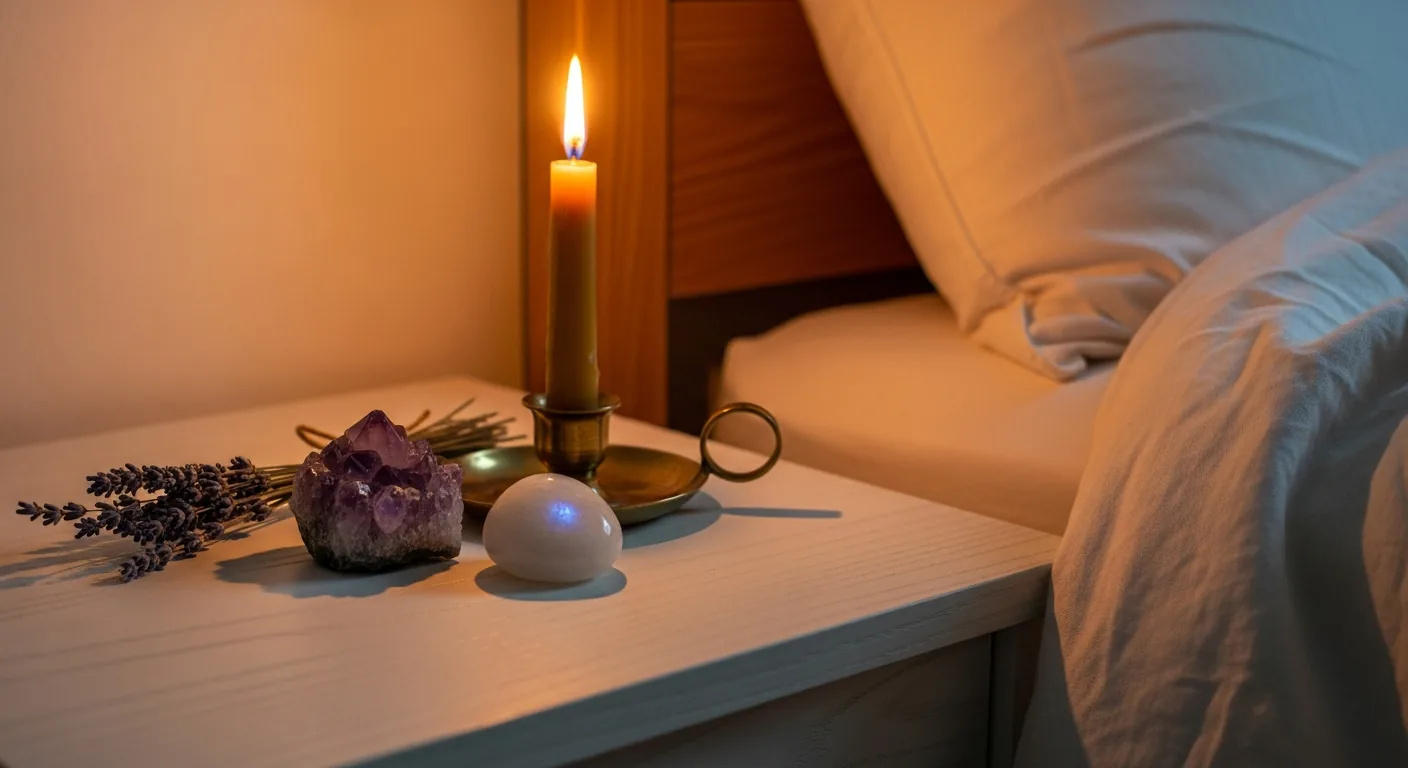
Where to place it: Nightstand within arm's reach, or tucked into your pillowcase. A cluster on the nightstand radiates energy across the space more broadly than a tumbled stone under the pillow.
2. Moonstone — For Emotional Calm Before Sleep
Chakra: Crown, third eye, sacral Mohs Hardness: 6-6.5 Sleep benefit: Balances emotional turbulence, supports hormonal sleep cycles
Moonstone carries a receptive, calming energy that mirrors the quiet of nighttime. It is useful when sleep is disrupted by emotional upheaval — anxiety, sadness, or hormonal shifts. Moonstone does not suppress these emotions. It smooths them, allowing you to drift off without emotional spirals.
Where to place it: Under your pillow or on the nightstand. If dreams become unusually vivid, move it to the nightstand instead.
3. Selenite — For Clearing Bedroom Energy
Chakra: Crown Mohs Hardness: 2 Sleep benefit: Purifies the sleep environment, creates calm atmosphere
Selenite cleanses the energetic atmosphere of your bedroom rather than acting on you directly. Many practitioners report that placing a selenite tower in the bedroom shifts the room's feeling from heavy to light.
Named after Selene, the Greek moon goddess, selenite is self-cleansing, requiring no maintenance beyond an occasional moonlight refresh.
Where to place it: Dresser, windowsill, or shelf — anywhere it can radiate outward. Selenite towers in the corners of the room create a grid that clears the entire space.
Caution: Selenite is very soft (Mohs 2) and dissolves in water. Keep it completely dry.
4. Lepidolite — For Deep Relaxation
Chakra: Third eye, heart, crown Mohs Hardness: 2.5-3 Sleep benefit: Deep muscular and nervous system relaxation, emotional settling
Lepidolite is a lilac-grey mica mineral that naturally contains lithium — the same element prescribed in psychiatric medications. It has a settling quality that practitioners describe as a gentle heaviness.
It is particularly effective when insomnia has a physical component — the inability to unclench the jaw, relax the shoulders, or release accumulated tension.
Where to place it: Hold it in your hand as you fall asleep, or place it on your chest over the heart center. Because lepidolite is soft and flaky, use a cloth pouch if placing it under your pillow.
5. Labradorite — For Dreamwork and Deep Sleep
Chakra: Third eye, throat Mohs Hardness: 6-6.5 Sleep benefit: Supports deep sleep cycles, enhances meaningful dreams, eases nighttime anxiety
Labradorite is a feldspar mineral known for its labradorescence — flashes of blue, gold, and green. It works beneath the surface, in the deep layers of consciousness where rest happens.
Labradorite is useful for people who sleep lightly, wake frequently, or rarely feel rested. It supports the deeper sleep stages where physical restoration takes place.
Where to place it: Nightstand is ideal. For dream recall or lucid dreaming, place it under your pillow.
6. Fluorite — For Mental Clarity Before Bed
Chakra: Third eye, heart (varies by color) Mohs Hardness: 4 Sleep benefit: Organizes scattered thoughts, eases decision anxiety, mental wind-down
Fluorite comes in bands of purple, green, blue, and clear. Known as the "genius stone," it is the sleep crystal for minds that refuse to stop processing at bedtime. If you lie awake analyzing problems or sorting through decisions, fluorite helps the mind file everything away — a gentle "shutting down" signal.
Where to place it: Nightstand, about 1-2 feet from your head. Fluorite is soft (Mohs 4) — avoid placing it under a pillow where pressure might chip it.
7. Howlite — For Physical Stillness
Chakra: Crown Mohs Hardness: 3.5 Sleep benefit: Promotes physical stillness, reduces restlessness, calms hyperactive energy
Howlite is a white stone marbled with grey veins, soft in both appearance and energy. It is one of the most calming crystals available, suited for physical restlessness at bedtime — tossing, turning, or restless legs.
Rather than actively calming you, howlite passively absorbs excess energy so your body can settle into stillness.
Where to place it: Under your pillow or in your pillowcase. You can also hold it as you fall asleep — its cool, smooth surface encourages stillness.
8. Smoky Quartz — For Grounding Into Sleep
Chakra: Root Mohs Hardness: 7 Sleep benefit: Grounds anxious energy, eases nighttime fear, releases stress from the body
Smoky quartz is the grounding counterpart to clear quartz. Its dark, translucent body helps you feel anchored and safe — especially helpful for nighttime anxiety or fear of the dark.
Smoky quartz draws nervous energy downward, out of the racing mind and into the ground — creating the settled feeling that sleep needs.
Where to place it: At the foot of the bed or on the floor beside it. Root chakra stones work best positioned lower than your body, drawing energy downward.
9. Blue Lace Agate — For Soothing Nighttime Worry
Chakra: Throat Mohs Hardness: 6.5-7 Sleep benefit: Soothes worry, calms inner dialogue, eases the need to talk or process at bedtime
Blue lace agate is a pale blue banded chalcedony with a soft, calming energy. Connected to the throat chakra, it is the crystal for people who lie awake rehearsing conversations or replaying what they said.
Blue lace agate soothes the inner dialogue, reassuring you that those conversations can wait until morning.
Where to place it: Nightstand near your head, or held briefly against your throat during breathing exercises before sleep.
Crystal Sleep Reference Table
| Crystal | Sleep Benefit | Where to Place | Intensity |
|---|---|---|---|
| Amethyst | Calms racing thoughts | Nightstand or pillowcase | Moderate |
| Moonstone | Balances emotional turbulence | Under pillow or nightstand | Gentle |
| Selenite | Clears bedroom energy | Dresser, windowsill, room corners | Ambient |
| Lepidolite | Deep nervous system relaxation | On chest, or in cloth pouch under pillow | Gentle-moderate |
| Labradorite | Supports deep sleep cycles | Nightstand | Moderate |
| Fluorite | Organizes scattered thoughts | Nightstand (not under pillow) | Gentle |
| Howlite | Reduces physical restlessness | Under pillow or in hand | Very gentle |
| Smoky quartz | Grounds anxious energy | Foot of bed or bedside floor | Moderate |
| Blue lace agate | Soothes nighttime worry | Nightstand or throat hold | Gentle |
The best sleep crystal depends on what's keeping you awake. Take our 2-minute quiz to find the stone that matches your specific sleep pattern.
Where to Place Crystals for Sleep
Crystal placement matters. The position relative to your body affects how strongly you feel the stone's energy and which aspect of sleep it supports. Experiment with these four approaches to find what works for your body.
Under Your Pillow
The most direct method — strongest influence on mind and dream state. Best for: howlite, moonstone, labradorite. Use a cloth pouch for soft stones like lepidolite.
On the Nightstand
The most popular placement. Keeps the crystal within your energy field (1-3 feet) without direct contact. Best for: amethyst, fluorite, blue lace agate. The safest starting point for newcomers.
At the Foot of the Bed
Grounding stones work best here, positioned lower than your body to draw anxious energy downward. Best for: smoky quartz, black tourmaline.
Room Corners
For crystals that work on the space rather than the person. Place selenite towers in two or four corners of the bedroom to create a calming grid across the entire room.
Crystals to AVOID at Bedtime
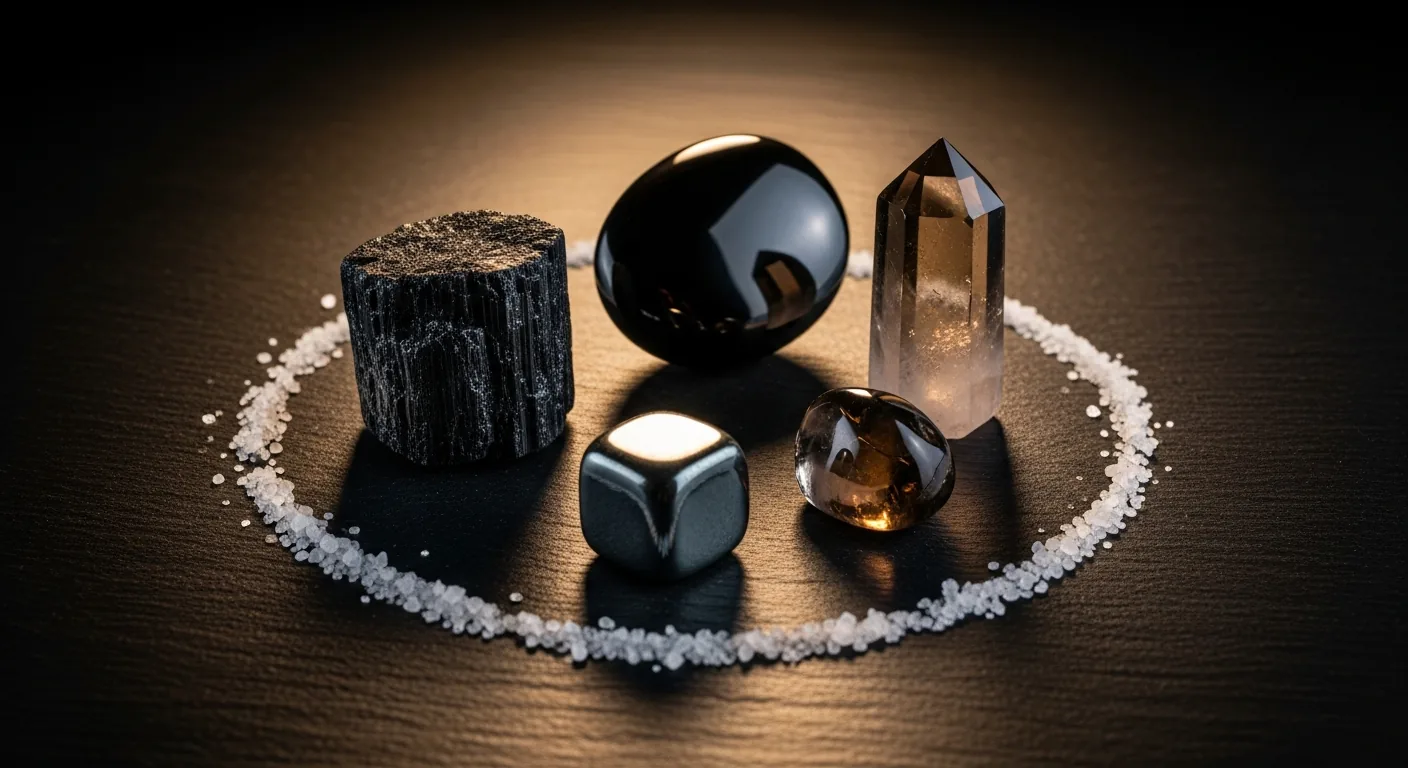
Not all crystals belong in the bedroom at night. High-energy, stimulating stones can keep your mind alert or your nervous system activated. Remove or cover these stones before bed.
- Citrine: Associated with vitality and the solar plexus. Excellent for mornings, counterproductive at night.
- Carnelian: A sacral chakra stone of action and physical energy. Stimulates rather than settles.
- Tiger's eye: Combines solar energy with grounding. The solar component can keep the mind alert.
- Pyrite: Carries strong, active energy associated with willpower and ambition. Not a bedtime stone.
- Red jasper: Promotes physical stamina and endurance — the opposite of what you need for rest.
- Clear quartz: An amplifier. Near a calming stone it amplifies the calm, but alone it can amplify mental activity.
If you are unsure about a crystal, try sleeping with it for three nights. If your sleep worsens, move it to another room.
Bedtime Crystal Ritual: 5 Steps
A simple nightly ritual trains your brain to associate crystal work with winding down. Consistency is more important than duration — even three minutes creates a meaningful transition from day into sleep.
Step 1: Clear Your Space (1 minute)
Wave a selenite wand around the perimeter of your bed, or hold it and set the intention that your bedroom is a calm, protected space. If you do not have selenite, open a window briefly to let fresh air circulate.
Step 2: Choose Your Crystal (30 seconds)
Select one crystal based on what you need tonight. Racing thoughts? Amethyst. Emotional heaviness? Moonstone. Physical restlessness? Howlite. Let your body tell you what it needs.
Step 3: Hold and Breathe (2 minutes)
Hold your chosen crystal in both hands, close your eyes, and take 5-10 slow breaths. Inhale for 4, hold for 4, exhale for 6. With each exhale, release one tension — shoulders, jaw, forehead, hands.
Step 4: Set Your Intention (30 seconds)
State a simple sleep intention, silently or aloud: "I release this day and welcome rest." The words matter less than the sincerity.
Step 5: Place and Release (30 seconds)
Set the crystal in its sleeping position — nightstand, under pillow, or foot of the bed. Turn off the light. Let the crystal hold the intention while you drift off.
Frequently Asked Questions
Is it safe to sleep with crystals under my pillow?
Yes, as long as the crystal is smooth and small enough that it will not press into your head or neck. Tumbled stones and palm stones work best. Avoid raw or pointed specimens — they are uncomfortable and can scratch skin. If a stone feels too intense close to your head, move it to the nightstand. There is no energetic danger, only comfort to consider.
How many crystals should I use for sleep?
Start with one. Adding too many at once makes it difficult to know which is helping and which might be keeping you awake. Use a single stone for at least a week before adding a second. Most practitioners find one to three crystals is the effective range — beyond that, the energy becomes cluttered. Quality of intention matters more than quantity.
Can crystals give you nightmares?
Some crystals — particularly labradorite and amethyst — can intensify dreams, which may include vivid or unsettling content. This is not the crystal "creating" nightmares but supporting deeper access to your subconscious. If your dreams become disturbing, move the crystal further away (nightstand instead of pillow, dresser instead of nightstand) or switch to a gentler stone like howlite.
Do crystals for sleep replace medical treatment for insomnia?
No. Crystals are a complementary practice, not a substitute for medical care. If you experience chronic insomnia lasting more than three weeks or sleep problems that significantly affect daily functioning, consult a healthcare professional. Crystals support relaxation and bedtime routines, but they should work alongside — not instead of — proper medical advice.