Love comes in many forms — the tenderness you show yourself, the spark of new romance, the steady warmth of a long partnership, and the courage it takes to open your heart again after heartbreak. Each form benefits from a different kind of crystal support. This guide covers seven stones associated with love across cultures and centuries, with practical advice on how to work with each one.
Which Crystals Are Best for Love?
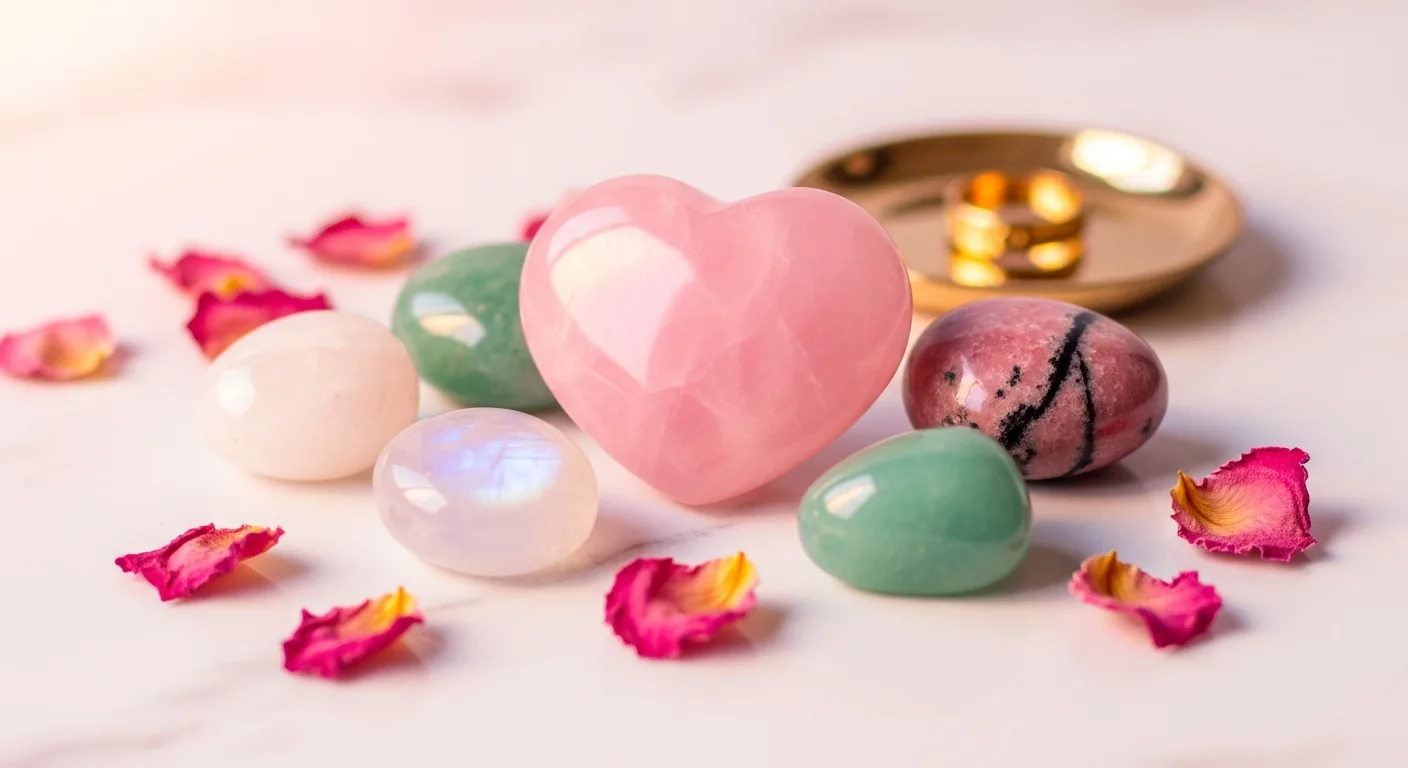
The most powerful crystals for love are rose quartz for self-love, moonstone for new romance, green aventurine for openness and luck in love, malachite for emotional transformation, rhodonite for healing heartbreak, rhodochrosite for passion, and garnet for deep commitment. All seven connect primarily to the heart chakra.
The right crystal for you depends on where you are in your emotional journey — whether you are building a relationship with yourself, inviting new love in, or deepening an existing connection. Below, we explore all seven in detail.
1. Rose Quartz — The Stone of Self-Love
Chakra: Heart Mohs Hardness: 7 Type of love: Self-love, self-compassion, emotional gentleness
Rose quartz is the quintessential love crystal. Its soft pink color comes from trace amounts of titanium, iron, or manganese, and it has been associated with love and beauty since at least 600 BC. The ancient Greeks attributed it to Aphrodite, and the Romans used it in love seals.
What makes rose quartz special is that it starts where all lasting love begins: with yourself. It is the stone of self-compassion — the antidote to the inner critic that tells you that you are not enough or not worthy of love. Before you can receive love fully from another person, self-love must be in place. Rose quartz holds that space.
How to use it:
- Morning ritual: Hold rose quartz over your heart center for 2-3 minutes each morning while breathing slowly. Repeat: "I deserve love, including my own."
- Bath companion: Place it in your bath water (water-safe at Mohs 7) for a self-care ritual.
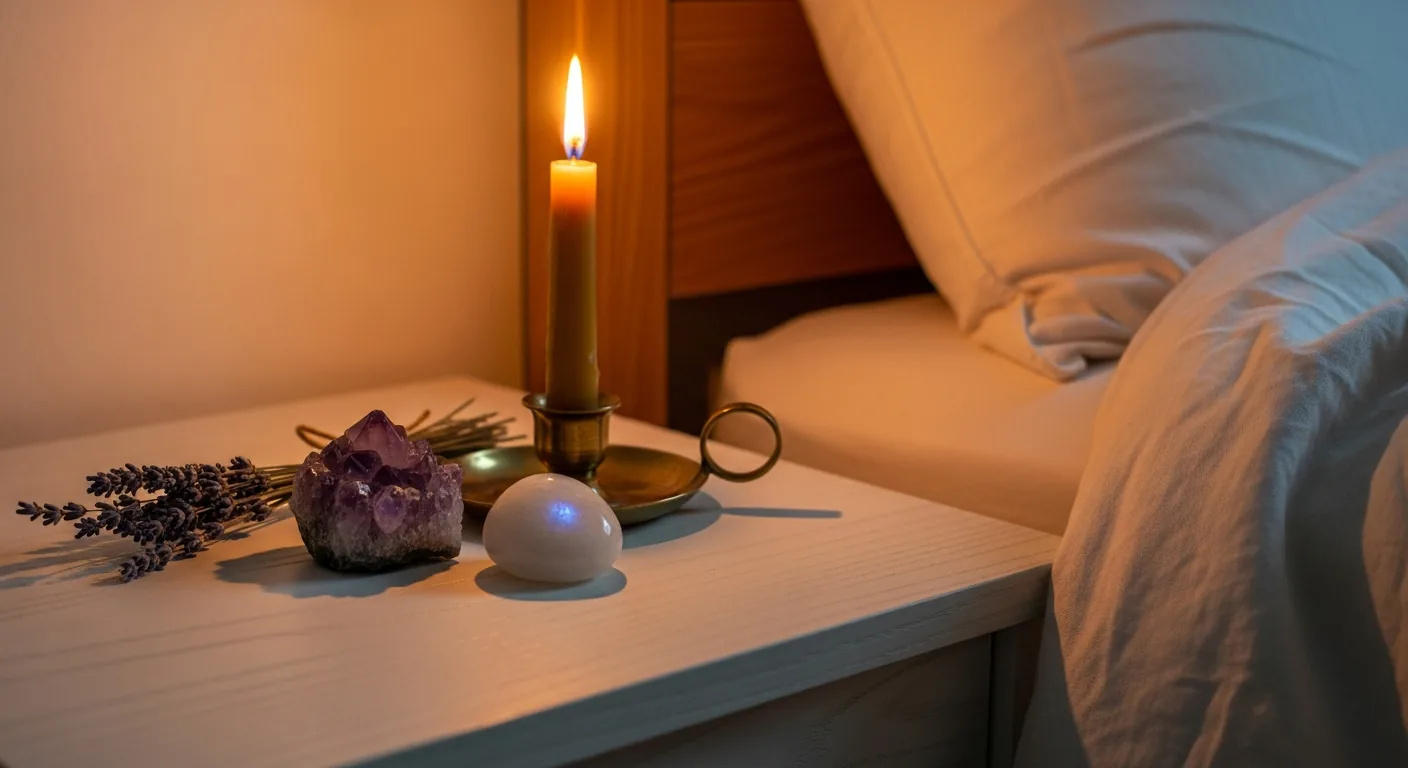
- Bedroom placement: Keep it on your nightstand to fill your sleeping space with gentle heart energy.
- Wear it: A rose quartz pendant near the heart carries its energy throughout the day.
2. Moonstone — The Stone of New Beginnings
Chakra: Crown, third eye, sacral Mohs Hardness: 6-6.5 Type of love: New romance, attraction, emotional intuition
Moonstone is a feldspar mineral with a distinctive adularescence — an ethereal inner glow that shifts as the stone moves. It has been used as a talisman for lovers in India for centuries, where it is considered sacred and believed to bring beautiful visions of the future.
Moonstone is the crystal of new beginnings, suited for the early stages of love — when you are open to meeting someone or allowing a new connection to deepen. Its energy is receptive rather than aggressive. It does not force love to appear but opens you to recognizing love when it arrives.
How to use it:
- Wear it on a date: A moonstone ring or bracelet carries its receptive energy into social situations.
- New moon intention: On the new moon, hold moonstone and set a specific intention for the love you want to invite.
- Carry it: Keep a tumbled moonstone in your pocket when going somewhere new people might be present.
- Sleep with it: Place moonstone under your pillow to enhance intuitive dreams about love.
3. Green Aventurine — The Stone of Luck in Love
Chakra: Heart Mohs Hardness: 6.5-7 Type of love: Openness, optimism, emotional availability
Green aventurine is a variety of quartz with a shimmering green color and a sparkly effect called aventurescence, caused by tiny inclusions of fuchsite or mica. Known traditionally as the "stone of opportunity," it is associated with good fortune in all areas — including love.
What green aventurine does for love is subtle but important: it helps you remain open and emotionally available. Fear of rejection and protective walls are the biggest barriers to love. Green aventurine gently softens those defenses without making you feel exposed, bringing an optimistic energy that says, "It is safe to try again."
How to use it:
- Heart chakra meditation: Lie down, place green aventurine on your heart center, and breathe deeply for 10 minutes.
- Carry daily: Keep it in your left pocket (the receiving side) to attract love and opportunity.
- Pair with rose quartz: Green aventurine handles openness while rose quartz handles self-worth — together, a foundation for healthy love.
- Place in shared spaces: A green aventurine in your living room invites warmth and connection.
4. Malachite — The Stone of Emotional Transformation
Chakra: Heart, solar plexus Mohs Hardness: 3.5-4 Type of love: Transformation, breaking toxic patterns, courageous love
Malachite is a copper carbonate mineral with distinctive green banding — concentric rings that look like a topographic map. Used since antiquity in Egypt, it was associated with Hathor, protector of love, joy, and women. Its energy is more intense than rose quartz. Where rose quartz soothes, malachite transforms.
Malachite is the crystal for people who recognize that their relationship patterns need to change. It brings hidden patterns to the surface — codependency, people-pleasing, fear of intimacy — so they can be seen and released. This process is not always comfortable, but it is necessary for genuine love to take root.
How to use it:
- Journaling companion: Hold malachite while journaling about your relationship patterns. Write what comes up without editing.
- Solar plexus placement: Place it on your solar plexus to strengthen boundaries and personal power within relationships.
- Meditation for release: Hold malachite and ask it to reveal one pattern blocking you from love. Sit with whatever arises.
- Important caution: Malachite contains copper — never use it for crystal-infused water. Handle in polished form only.
5. Rhodonite — The Stone of Healing Heartbreak
Chakra: Heart Mohs Hardness: 5.5-6.5 Type of love: Emotional recovery, forgiveness, rebuilding trust
Rhodonite is a manganese silicate with a distinctive appearance — rosy pink crossed with veins of black manganese oxide. Those dark veins through the pink are a fitting metaphor: beautiful love that has weathered real pain. This is the crystal for hearts that have been broken and need help finding their way back.
Rhodonite supports emotional recovery after a breakup, betrayal, or loss. It does not bypass the grief — it helps you move through it with grace. Rhodonite is also strongly associated with forgiveness, not necessarily of the other person, but of yourself for whatever self-blame you carry.
How to use it:
- Heart hold: When grief or anger rises, hold rhodonite over your heart and breathe deeply for 5 minutes.
- Forgiveness ritual: Write a letter expressing everything you need to release. Hold rhodonite while reading it aloud, then discard the letter.
- Carry during transitions: If newly single, carry rhodonite daily as a stabilizing companion.
- Pair with rose quartz: Rhodonite clears the wound; rose quartz fills it with self-compassion.
6. Rhodochrosite — The Stone of Passionate Love
Chakra: Heart, solar plexus Mohs Hardness: 3.5-4 Type of love: Passion, joyful love, inner child healing
Rhodochrosite is a manganese carbonate with stunning raspberry-pink to rose-red bands. Its name comes from the Greek "rhodon" (rose) and "chroma" (color). Where rose quartz is gentle and soothing, rhodochrosite is exuberant. It brings the kind of love that makes you laugh, play, and feel fully alive.
Rhodochrosite is also connected to inner child work. It gently reopens that playful, trusting part of you — the part that loved freely before it learned to guard itself.
How to use it:
- Joy practice: Hold rhodochrosite and recall a memory of pure, uncomplicated happiness. Let that feeling fill your body.
- Date nights: Carry rhodochrosite when you want to bring warmth and spontaneity into a romantic evening.
- Heart and solar plexus: Place it between your heart and solar plexus during meditation to bridge warmth with confidence.
- Important note: Rhodochrosite is soft (Mohs 3.5-4). Avoid rings or bracelets — a pendant or pocket stone is gentler.
7. Garnet — The Stone of Committed Love
Chakra: Root, heart Mohs Hardness: 6.5-7.5 Type of love: Commitment, devotion, long-term partnership, physical intimacy
Garnet is one of the oldest known gemstones, used in jewelry since the Bronze Age. Its deep red color has symbolized devotion across nearly every ancient civilization. It is the crystal of partnerships that last.
Garnet is for love that has already been found and needs to be nourished. It strengthens commitment, rekindles physical passion, and provides the root chakra stability that lasting love requires.
How to use it:
- Bedroom crystal: Place garnet on your nightstand or under your mattress to rekindle intimacy.
- Anniversary ritual: Sit together, each holding a garnet, and share what you are grateful for.
- Root chakra grounding: Hold garnet at the base of your spine during meditation to strengthen stability in your partnership.
- Wear it: Garnet rings have been exchanged between lovers for centuries as a symbol of devotion.
Not sure whether you need a self-love stone or a romance attractor? Our crystal quiz identifies your heart chakra's current needs based on your natal chart.
Self-Love vs Romantic Love: Which Crystals for Which?
Self-love and romantic love are not separate goals — self-love is the foundation that makes healthy romantic love possible. However, certain crystals are better suited for inner work, while others support outward connection. Knowing the distinction helps you choose the right stone for your current focus.
| Focus | Best Crystals | Why |
|---|---|---|
| Self-love and compassion | Rose quartz, rhodonite | Soften the inner critic, heal emotional wounds |
| Attracting new love | Moonstone, green aventurine | Open receptivity, invite opportunity |
| Healing after heartbreak | Rhodonite, malachite | Process grief, break toxic patterns |
| Deepening passion | Rhodochrosite, garnet | Rekindle joy, strengthen physical connection |
| Long-term commitment | Garnet, rose quartz | Sustain devotion, maintain tenderness |
If you are unsure where to start, begin with rose quartz. It supports every type of love and never overwhelms.
How to Create a Simple Love Crystal Grid
A crystal grid arranges multiple stones in a geometric pattern to amplify a shared intention. Love grids focus your energy around romance, self-love, or partnership goals.
What You Need
- 1 center stone (rose quartz — your primary love intention)
- 6 surrounding stones (any combination from this guide)
- A flat surface where the grid can remain undisturbed
Steps
- Cleanse and charge all stones before placing them.
- Set your intention clearly. Write it down: "I am open to love that is healthy, mutual, and joyful."
- Place the center stone first — the rose quartz anchor.
- Arrange the surrounding stones in a circle. Alternate moonstone and green aventurine for attracting new love, or garnet and rhodochrosite for deepening passion.
- Activate the grid by using a clear quartz point to draw an invisible line connecting each stone to the center, from outside in.
- Leave the grid in place for 24 hours to several weeks. Revisit daily, holding your intention in mind.
Crystal Combinations for Love
Some love crystals work especially well together:
- Rose Quartz + Moonstone: Self-love meets new romance. This pairing attracts love from a place of wholeness rather than need. Keep both on your nightstand or carry them together.
- Rhodonite + Rose Quartz: The healing combination. Rhodonite clears old heartbreak while rose quartz fills the space with compassion. Use together after a breakup or during emotional recovery.
- Garnet + Rhodochrosite: The passion pair. Garnet grounds committed love in the root chakra while rhodochrosite brings warmth to the heart. Place both in your bedroom.
- Green Aventurine + Malachite: Courage to love again. Green aventurine opens the heart with optimism while malachite breaks through defensive patterns. Carry both when ready to take an emotional risk.
Frequently Asked Questions
How long does it take for love crystals to work?
Most people notice subtle emotional shifts within one to three weeks of consistent daily practice — a softening of the heart, increased openness, or more self-compassionate inner dialogue. The crystals are not creating love externally; they are helping you shift internally so that love can flow more freely. Patience and consistency matter more than the specific stone you choose.
Can I use multiple love crystals at the same time?
Yes, and combining crystals often produces richer results. Start with two that address complementary aspects — rose quartz for self-love paired with moonstone for openness. Avoid more than three or four at once, as the energy can feel unfocused. If new to crystal work, begin with one stone for two weeks before adding a second.
Where should I place love crystals in my home?
The bedroom is the most impactful location. Place rose quartz and garnet on your nightstand, or tuck them under your mattress. The bathroom is good for self-love stones supporting your morning routine. Avoid placing love crystals near electronics or in cluttered spaces — they benefit from calm, intentional environments.
Do love crystals work for platonic and family love too?
Absolutely. Rose quartz, rhodonite, and green aventurine support all forms of love — romantic, platonic, familial, and self-directed. The intention you set determines the direction. Hold rhodonite to heal a difficult family relationship, or carry green aventurine to deepen a friendship. Love crystals are not limited to romance.