Crystal healing has been practiced for over 5,000 years across nearly every ancient civilization, from Egyptian pharaohs wearing lapis lazuli to Chinese medicine practitioners using jade. Today, an estimated 30% of adults in the US and Europe have tried some form of crystal wellness practice. Whether you are drawn to crystals out of curiosity or a desire to support your well-being, this guide covers everything you need to get started with confidence and clarity.
What Is Crystal Healing?
Crystal healing is a holistic wellness practice that uses natural minerals and gemstones to support physical, emotional, and spiritual well-being. Practitioners place crystals on or around the body, carry them, or meditate with them to promote relaxation, focus, and energetic balance. It is considered a complementary practice, not a replacement for medical care.
The practice rests on the idea that crystals interact with the body's energy field. Different stones are associated with different properties: amethyst with calm, rose quartz with emotional warmth, citrine with confidence, and so on. These associations have deep roots in cultural traditions spanning thousands of years.
Crystal healing is not a regulated medical treatment. Most practitioners describe it as a supportive tool for mindfulness and self-care, much like aromatherapy or breathwork. The crystals themselves become anchors for intention-setting — tangible reminders of the state of mind you want to cultivate.
How Do Crystals Work?
Crystals have a highly ordered atomic structure that gives them stable vibrational frequencies. Proponents believe this stability can influence the body's own biofield. While scientific research on crystal healing is limited, the piezoelectric effect in quartz is well-documented, and the mindfulness benefits of ritual practices are widely supported by psychology research.
There are three main frameworks people use to explain how crystals might support wellness:
Vibrational Resonance
Every crystal has a fixed molecular structure that vibrates at a consistent frequency. This is measurable physics — it is why quartz is used in watches, electronics, and medical ultrasound equipment. The theory behind crystal healing suggests that a crystal's stable vibration can help "entrain" or gently influence the less stable energy patterns in the human body, much like a tuning fork steadies a musical instrument.
The Piezoelectric Effect
Quartz crystals generate a measurable electrical charge when subjected to mechanical pressure. This property, called piezoelectricity, was first demonstrated by Jacques and Pierre Curie in 1880. Tourmaline also exhibits this effect. While the medical implications of handling a piezoelectric stone are not proven, it is a genuine physical property that sets crystals apart from inert objects.
The Role of Intention and Ritual
Psychology research consistently shows that mindfulness rituals, focused breathing, and tactile grounding objects reduce cortisol levels and improve subjective well-being. Holding a crystal during meditation gives your mind a focal point. Choosing a stone with intention reinforces the mental state you want to cultivate. Whether the benefit comes from the stone itself, the ritual around it, or both, the practical outcome — feeling calmer, more centered, more aware — is real for many people.
The honest answer is that we do not have large-scale clinical trials proving crystals heal disease. What we do have is thousands of years of cultural practice, measurable physical properties in certain minerals, and solid evidence that intentional self-care rituals improve quality of life. Most crystal enthusiasts hold both truths comfortably.
10 Best Crystals for Beginners
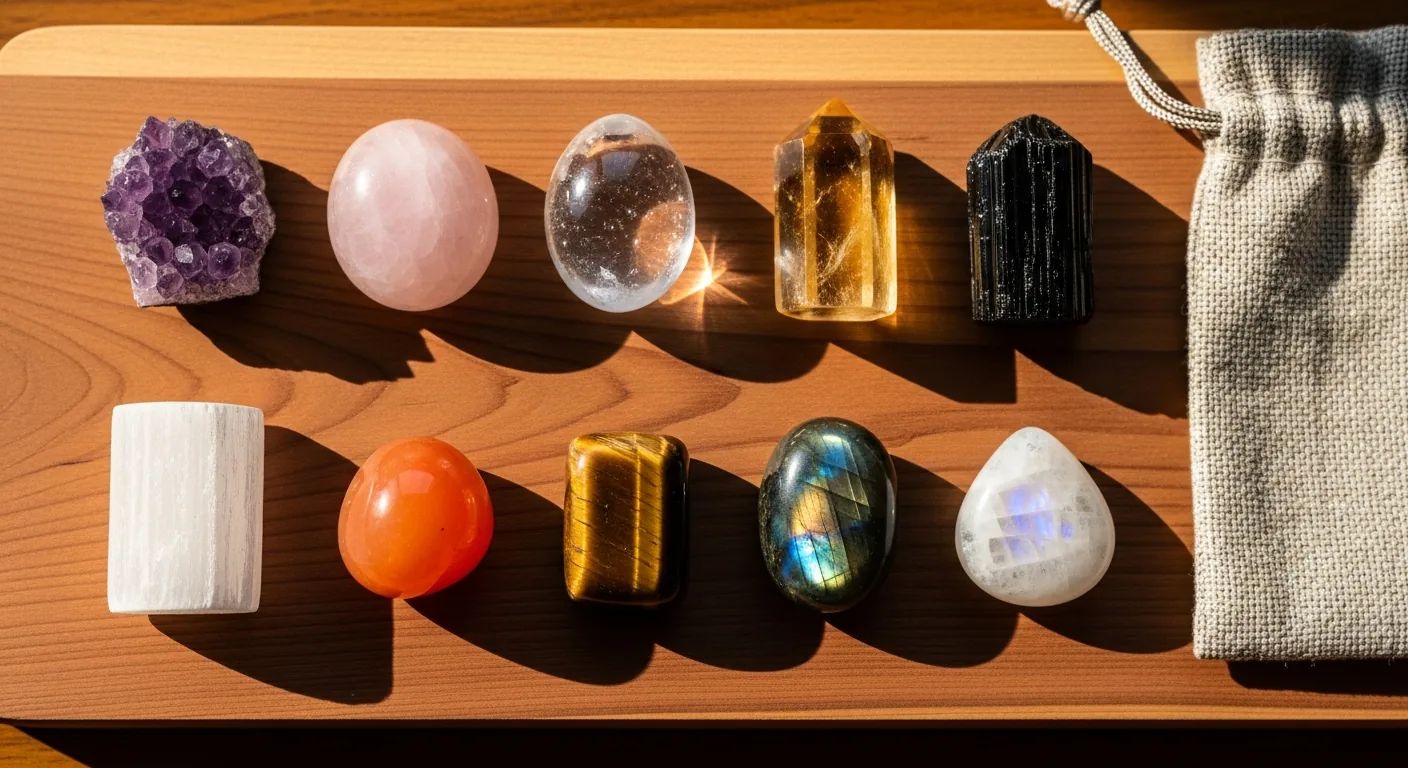
If you are building your first collection, these ten stones are widely available, affordable, and versatile. Each one has clear, well-established associations that make it easy to work with right away.
1. Clear Quartz — The Universal Stone
- Clear quartz is often called the "master healer" because it is believed to amplify the properties of any stone near it. It is transparent to milky white, rates 7 on the Mohs hardness scale, and is the most abundant mineral on Earth. Use it for clarity of thought, energy amplification, and general-purpose support. If you buy only one crystal, this is the one.
2. Amethyst — The Calming Stone
- Amethyst is a purple variety of quartz that has been prized since ancient Greece, where it was believed to prevent intoxication. It is associated with the crown and third eye chakras and is used for stress relief, restful sleep, and mental clarity. Its rich violet color comes from iron impurities and natural irradiation within the earth.
3. Rose Quartz — The Heart Stone
- Rose quartz is the classic stone of love and emotional healing. Its soft pink color comes from trace amounts of titanium, iron, or manganese. Linked to the heart chakra, it is used for self-compassion, relationship harmony, and easing grief. It is gentle enough for anyone and makes an excellent bedside stone.
4. Citrine — The Confidence Stone
- Citrine ranges from pale yellow to deep amber and is associated with the solar plexus chakra. It is traditionally linked to abundance, personal willpower, and creative motivation. Natural citrine is relatively rare; most commercial citrine is heat-treated amethyst, which is still beautiful and widely used.
5. Black Tourmaline — The Protection Stone
- Black tourmaline is a grounding stone associated with the root chakra. It is one of the few crystals that exhibits both piezoelectric and pyroelectric properties, meaning it generates charge from pressure and heat. People use it to feel protected, grounded, and shielded from negative energy. Place it near your front door or carry it in your pocket.
6. Selenite — The Cleansing Stone
- Selenite is a form of gypsum with a pearly, translucent appearance. It rates just 2 on the Mohs scale, making it very soft and water-sensitive. Selenite is used to cleanse other crystals and clear stagnant energy in a space. A selenite plate or bowl makes a practical charging station for your collection.
7. Tiger's Eye — The Courage Stone
- Tiger's eye is a golden-brown stone with a silky, chatoyant shimmer caused by fibrous quartz replacing crocidolite. It is linked to the solar plexus chakra and used for courage, focus, and decision-making. Its warm, earthy energy makes it a popular choice for people facing transitions or new challenges.
8. Lapis Lazuli — The Wisdom Stone
- Lapis lazuli is a deep blue metamorphic rock that has been treasured for over 6,500 years. The ancient Egyptians ground it into powder for cosmetics and pigment (ultramarine). Connected to the throat and third eye chakras, it is associated with honest communication, intellectual clarity, and inner truth.
9. Carnelian — The Vitality Stone
- Carnelian is a warm orange-red chalcedony linked to the sacral chakra. Ancient warriors wore it into battle for courage. It is associated with creative energy, motivation, and physical vitality. Its bright, warm color makes it a mood-lifter on grey days.
10. Smoky Quartz — The Grounding Stone
- Smoky quartz ranges from light grey-brown to nearly black, colored by natural radiation within the earth acting on aluminum impurities. It is connected to the root chakra and used for grounding, releasing negativity, and emotional resilience. It is an excellent companion during stressful periods.
How to Choose Your First Crystal
Choosing your first stone can feel overwhelming when you are facing a case full of options. Here are three reliable methods.
Method 1: Follow Your Intuition
This is the approach most crystal practitioners recommend for beginners. Visit a shop — online or physical — and notice which stone catches your eye first. Which color draws you in? Which shape feels right when you pick it up? Your instinct often points you toward what you need, even before your conscious mind catches up. Trust the pull.
Method 2: Start with an Intention
Think about what you want to invite into your life right now. Then match that intention to a stone:
| Intention | Recommended Crystal |
|---|---|
| Calm and stress relief | Amethyst |
| Self-love and emotional warmth | Rose quartz |
| Confidence and motivation | Citrine |
| Grounding and protection | Black tourmaline |
| Mental clarity and focus | Clear quartz |
| Better sleep | Amethyst or moonstone |
| Creative energy | Carnelian |
| Communication | Lapis lazuli |
Method 3: Use Your Birthstone or Zodiac Stone
Your traditional birthstone or zodiac-associated crystal can be a meaningful starting point:
- Aries (Mar 21 - Apr 19): Carnelian, red jasper
- Taurus (Apr 20 - May 20): Rose quartz, emerald
- Gemini (May 21 - Jun 20): Citrine, tiger's eye
- Cancer (Jun 21 - Jul 22): Moonstone, rose quartz
- Leo (Jul 23 - Aug 22): Citrine, sunstone
- Virgo (Aug 23 - Sep 22): Amazonite, moss agate
- Libra (Sep 23 - Oct 22): Lapis lazuli, rose quartz
- Scorpio (Oct 23 - Nov 21): Obsidian, labradorite
- Sagittarius (Nov 22 - Dec 21): Turquoise, sodalite
- Capricorn (Dec 22 - Jan 19): Garnet, smoky quartz
- Aquarius (Jan 20 - Feb 18): Amethyst, aquamarine
- Pisces (Feb 19 - Mar 20): Amethyst, fluorite
How to Start Working with Crystals: 5 Practical Steps
Step 1: Cleanse Your New Crystal
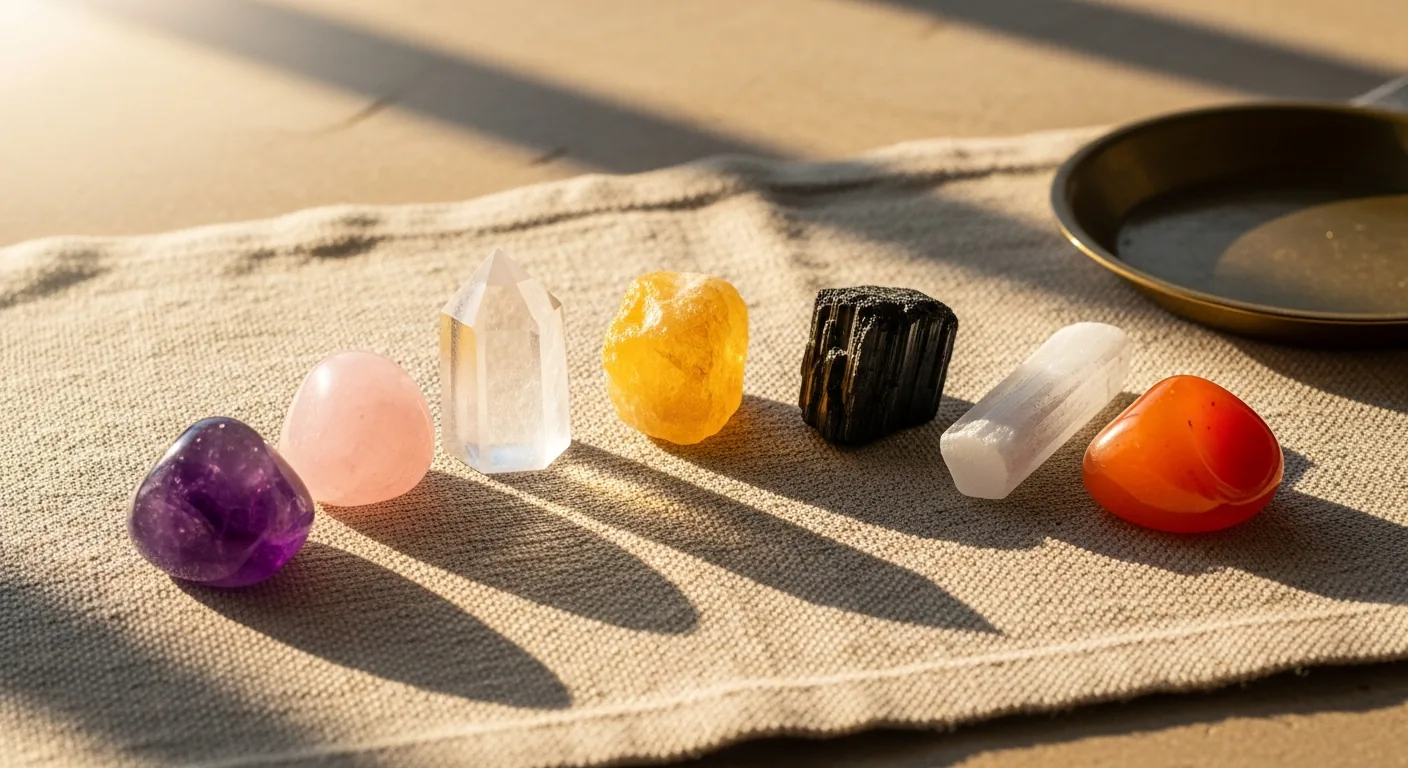
Crystals pass through many hands before they reach you — miners, wholesalers, shopkeepers, postal workers. Many practitioners recommend cleansing a new stone to reset its energy. Simple methods include placing it on a selenite plate for 6-12 hours, leaving it under moonlight overnight, or holding it under cool running water for 30 seconds (check that your stone is water-safe first — selenite, malachite, and halite dissolve or degrade in water).
Step 2: Set an Intention
Hold your cleansed crystal in both hands, close your eyes, and take a few deep breaths. State your intention clearly, either silently or aloud. For example: "I hold this amethyst to support calm and restful sleep." Intention-setting is what bridges the gap between owning a pretty rock and practicing crystal wellness. It takes 30 seconds and makes a noticeable difference.
Step 3: Keep It Close
The simplest way to work with a crystal is to keep it near you throughout the day. Carry a tumbled stone in your pocket or bag. Place one on your desk while you work. Set one on your nightstand before sleep. The stone serves as a physical reminder of the intention you set — every time you see it or touch it, you reconnect with that purpose.
Where you place your crystal matters. Here are some popular positions and the reasoning behind each:
| Placement | Purpose | Suggested Stone |
|---|---|---|
| Nightstand | Better sleep, calm dreams | Amethyst, moonstone |
| Work desk | Focus, clarity, productivity | Clear quartz, fluorite |
| Pocket or bag | Grounding throughout the day | Black tourmaline, smoky quartz |
| Near front door | Energetic protection of your space | Black tourmaline, selenite |
| Bathroom shelf | Self-care ritual anchor | Rose quartz |
| Meditation space | Deepened practice | Any stone aligned with your intention |
Step 4: Try a Short Meditation
Sit comfortably with your crystal in your hands or resting on your body. Set a timer for 5 minutes. Focus on your breath and the weight of the stone. If your mind wanders, gently bring your attention back to the crystal. This practice combines the well-documented benefits of meditation with the grounding tactile quality of holding a natural mineral. Even 5 minutes a day can shift your baseline stress level over a few weeks.
Step 5: Observe and Reflect
Keep a brief note — even a few words — about how you feel after working with your crystal. After a week or two, look for patterns. Do you sleep better with amethyst on your nightstand? Do you feel more grounded carrying black tourmaline? Your personal experience is the most valuable data point in crystal healing. What works for you is what matters.
If choosing feels overwhelming, let us help. Our free crystal quiz uses your birth chart to recommend the exact crystals your energy needs right now.
Common Beginner Mistakes
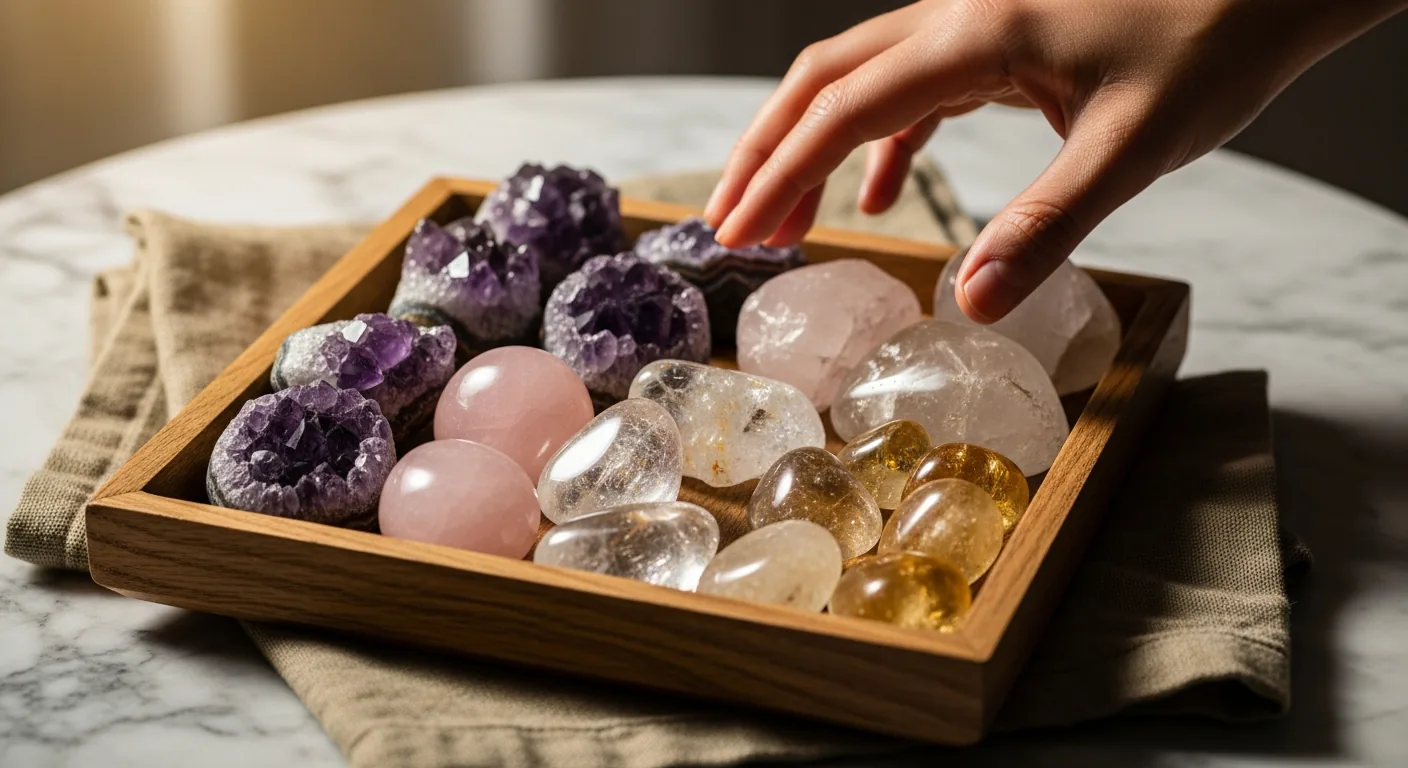
Buying too many crystals at once. It is tempting to fill a basket, but starting with one or two stones lets you build a real relationship with each one. You will learn more from spending a month with a single amethyst than from a shelf full of crystals you never use.
Skipping intention-setting. A crystal without an intention is just a mineral specimen (a beautiful one, but still). The intention is what transforms collecting into practice.
Putting water-sensitive stones in water. Selenite (Mohs 2), malachite, hematite, pyrite, and fluorite can dissolve, rust, or release toxic compounds in water. Always check before submerging. A good rule: if it is below 6 on the Mohs hardness scale, keep it dry.
Expecting instant or dramatic results. Crystal healing is subtle. Most people notice shifts in mood, sleep quality, or stress response over days or weeks, not minutes. Approach it as a long-term practice, not a quick fix.
Relying on crystals instead of professional care. Crystals are a complementary wellness tool. They are not a substitute for medical treatment, therapy, or medication. Use them alongside professional care, never instead of it.
Frequently Asked Questions
Do crystals really work?
The scientific evidence for crystal healing is limited, and no clinical trials have proven that crystals cure disease. However, many people report meaningful benefits from crystal practices. The ritual of choosing a stone, setting an intention, and meditating with it engages well-documented psychological mechanisms — mindfulness, focused attention, and placebo response — that genuinely reduce stress and improve well-being.
How many crystals should I start with?
Start with one to three crystals. A single clear quartz is enough to begin. If you want a small starter set, try clear quartz for clarity, amethyst for calm, and rose quartz for emotional balance. These three cover a wide range of intentions and work well together. You can always add more as your practice develops.
Do I need to cleanse new crystals?
Most practitioners recommend cleansing a new crystal before use. The simplest methods are placing it on a selenite plate for 6-12 hours or leaving it under full moonlight overnight. This is a symbolic reset — a way to clear any residual energy from handling and transport and start fresh with your own intention.
Can I wear multiple crystals at the same time?
Yes, you can wear multiple crystals together. Many people combine stones to address different needs — for example, amethyst for calm and citrine for confidence. Some practitioners suggest avoiding stones with opposing energies (like a high-energy carnelian with a deeply calming lepidolite), but in practice, most combinations work well. Start with two and notice how you feel.
How long before I feel results?
Most people notice subtle shifts within one to two weeks of consistent practice. These are often changes in mood, sleep quality, or general sense of groundedness rather than dramatic transformations. Some people feel a connection the first time they hold a crystal. Others take longer. Consistency matters more than intensity — five minutes a day with intention outweighs occasional marathon sessions.