Walking into a crystal shop for the first time can feel overwhelming. Hundreds of stones in every color, shape, and size compete for your attention, and the sheer variety can make it difficult to know where to begin. The good news is that there is no wrong choice. Crystals are tools for intention and self-care, and the best one for you is the one that resonates with where you are right now. This guide walks you through five reliable methods for choosing your first crystal, recommends the most popular starter stones, and covers the mistakes beginners should avoid.
How Do You Choose the Right Crystal?
The most reliable way to choose your first crystal is to combine two approaches: identify what you need support with (sleep, confidence, calm, protection) and then let your intuition guide you toward the specific stone that feels right. There is no single correct method — some people start with zodiac matches, others with color attraction, and all of these are valid starting points.
The crystal community has developed several time-tested approaches over the years, and most experienced practitioners used at least one of the five methods below when they started. You do not need to follow all five. Pick the one or two that feel most natural, and trust the process.
Method 1: Follow Your Intuition
Your first instinct is often your best guide. When you see, touch, or read about a crystal and feel an immediate pull — warmth in your chest, a sense of recognition, a simple "yes" — pay attention. That gut response is your intuition signaling a match, and it is the method most crystal practitioners recommend above all others.
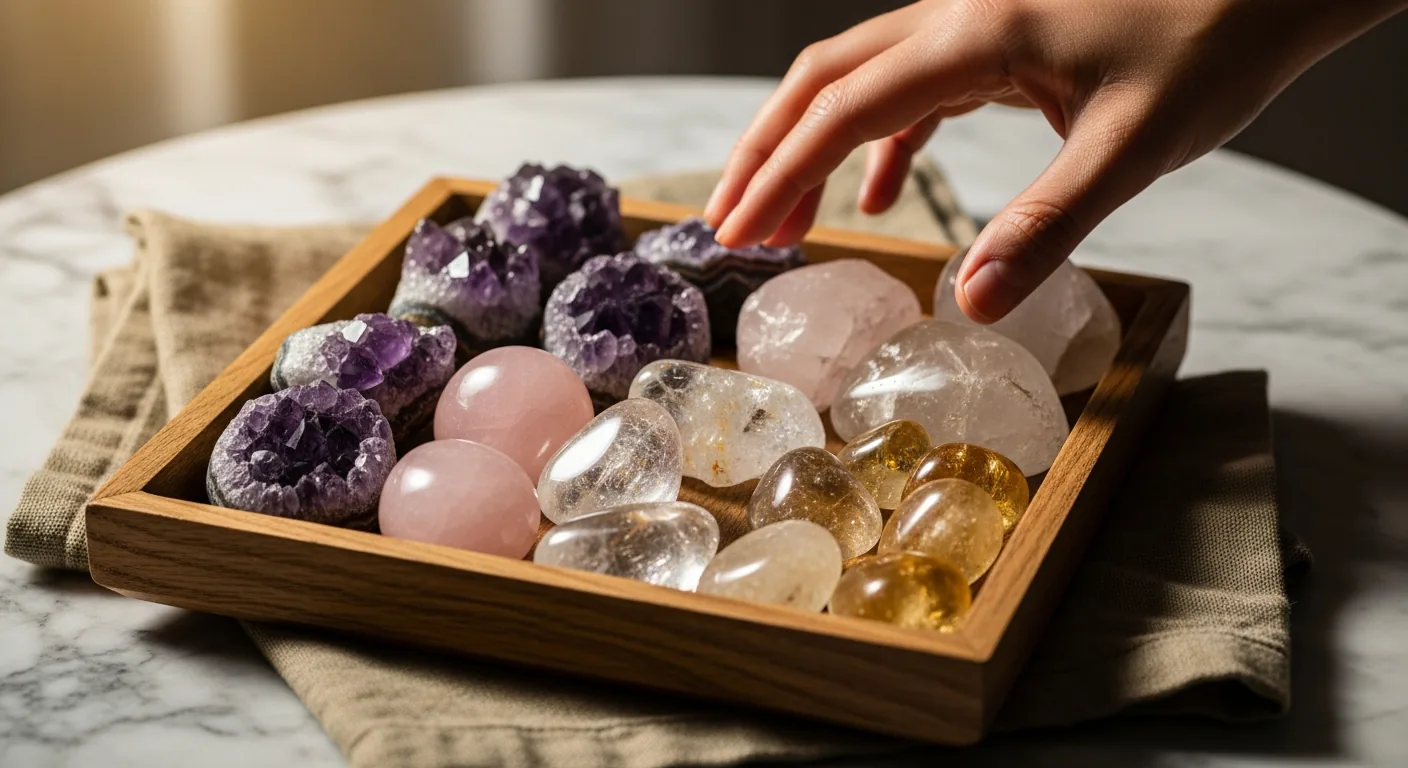
Intuition works best in person. Visit a shop, let your eyes wander without reading labels, and notice which stone draws your gaze repeatedly. Pick it up. Does it feel comfortable in your hand? Does it feel warm, cool, heavy, or light in a way that interests you? If the answer is yes, that is your stone.
If you are shopping online, intuition still works. Scroll through images without overthinking. The crystal that makes you pause, the one you keep coming back to after looking at others, is usually the right one. Trust the pull even if you cannot explain it logically.
Some people worry that intuition is unreliable or "too woo." Consider this: you already use intuition when choosing colors to wear, food to eat, and people to spend time with. Applying the same instinct to a crystal is no different. Your subconscious is processing information your conscious mind has not caught up with yet.
Method 2: Start with Your Intention
Think about what you need most right now. Write it down in a single sentence: "I want to feel calmer," "I need better focus," "I am looking for emotional comfort." Then match that intention to a crystal known for that property. This is the most practical method and gives you a clear starting point with immediate purpose.
Here are common intentions matched to beginner-friendly crystals:
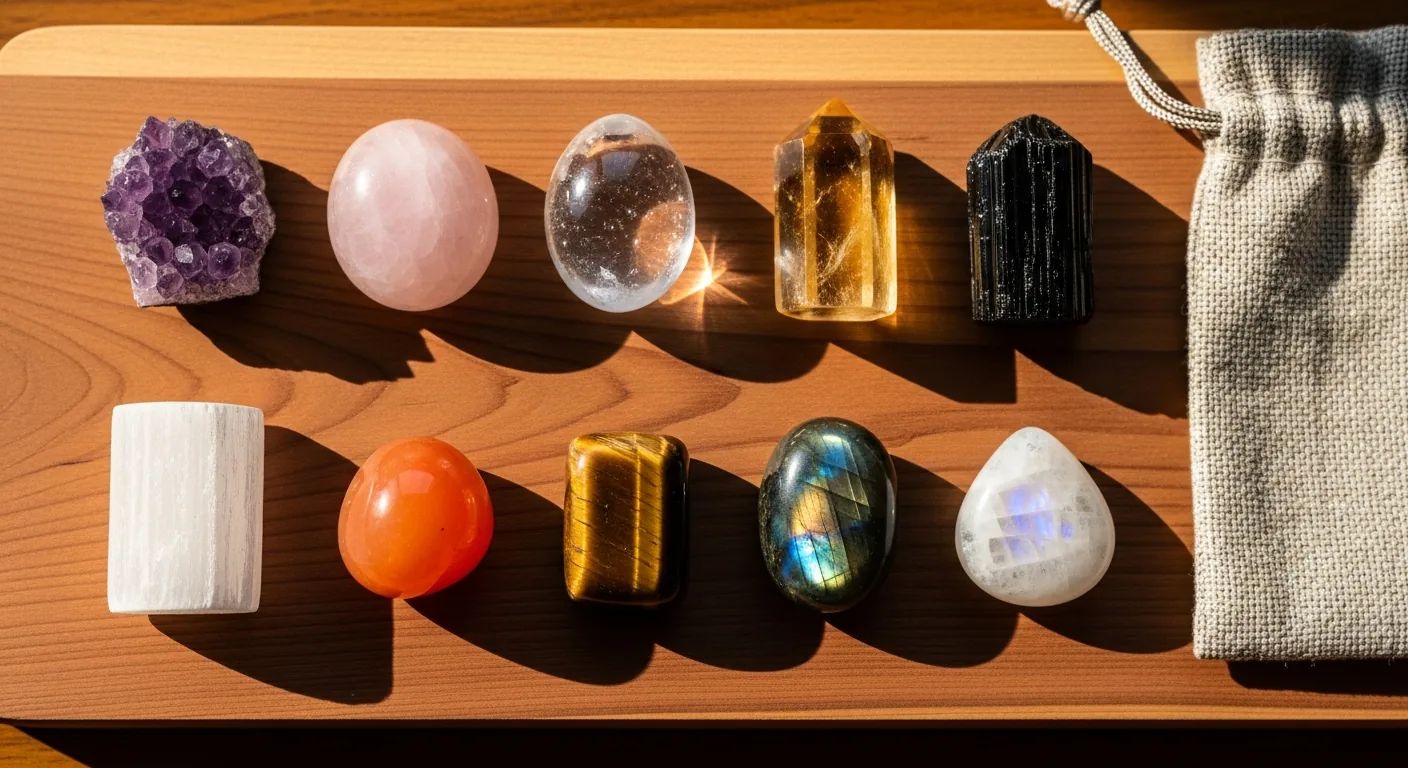
- Calm and stress relief: Amethyst quiets racing thoughts and supports restful sleep. It is the most commonly recommended crystal for anxiety.
- Self-love and emotional warmth: Rose quartz softens self-criticism and opens the heart to compassion — toward yourself and others.
- Clarity and amplification: Clear quartz is called the "master healer" because it amplifies any intention you set with it. If you are unsure of your specific need, clear quartz covers everything.
- Confidence and motivation: Citrine is linked to the solar plexus chakra and personal willpower. It is a warm, energizing stone for people who feel stuck or unmotivated.
- Protection and grounding: Black tourmaline absorbs negative energy and creates a sense of safety. It is ideal if you feel scattered, overwhelmed by other people's moods, or simply need firm ground beneath you.
- Emotional balance during change: Moonstone helps stabilize emotional cycles and supports people going through transitions — new jobs, moves, relationship shifts.
- Courage and focus: Tiger's eye is a golden-brown stone associated with decision-making and facing challenges head-on.
If your intention does not fit neatly into one category, start with clear quartz. Its versatility makes it the safest all-purpose choice.
Method 3: Match Your Zodiac Sign
Every zodiac sign has traditional crystal associations rooted in centuries of astrological practice. Choosing a crystal linked to your sun sign gives you a stone that is already energetically aligned with your personality, strengths, and growth areas. It is a simple method that requires no prior crystal knowledge.
| Zodiac Sign | Dates | Recommended Starter Crystal |
|---|---|---|
| Aries | Mar 21 - Apr 19 | Carnelian |
| Taurus | Apr 20 - May 20 | Rose quartz |
| Gemini | May 21 - Jun 20 | Blue lace agate |
| Cancer | Jun 21 - Jul 22 | Moonstone |
| Leo | Jul 23 - Aug 22 | Citrine |
| Virgo | Aug 23 - Sep 22 | Fluorite |
| Libra | Sep 23 - Oct 22 | Lepidolite |
| Scorpio | Oct 23 - Nov 21 | Black obsidian |
| Sagittarius | Nov 22 - Dec 21 | Turquoise |
| Capricorn | Dec 22 - Jan 19 | Garnet |
| Aquarius | Jan 20 - Feb 18 | Aquamarine |
| Pisces | Feb 19 - Mar 20 | Amethyst |
These associations are starting points, not rules. If you are a Leo but feel drawn to amethyst instead of citrine, go with amethyst. Zodiac matching is a useful filter when you are standing in front of thirty options and need a way to narrow the field, but it should never override a genuine gut feeling.
Method 4: Follow Color Attraction
The color you are most drawn to often reveals what your body and mind need. Crystal colors correspond broadly to the chakra system: red and black stones ground you, orange and yellow stones energize you, green and pink stones open the heart, blue stones calm communication, and purple stones deepen intuition. Let the color you cannot stop looking at guide your choice.
This method works well for visual people. If you walk into a shop and your eyes lock onto a deep blue stone, that attraction is meaningful. Blue stones like lapis lazuli and sodalite are linked to the throat chakra and honest self-expression. Your attraction to blue may indicate a need to speak your truth or be heard more clearly.
Here is a quick color-to-need reference:
- Black or dark brown: Grounding, protection, stability — black tourmaline, smoky quartz, hematite
- Red or deep orange: Energy, courage, vitality — carnelian, red jasper, garnet
- Yellow or gold: Confidence, creativity, personal power — citrine, pyrite, sunstone
- Green: Growth, abundance, heart healing — green aventurine, malachite, green jade
- Pink: Love, compassion, emotional softness — rose quartz, rhodonite, rhodochrosite
- Blue: Communication, calm, clarity — lapis lazuli, blue lace agate, blue calcite
- Purple or violet: Intuition, spiritual connection, mental peace — amethyst, lepidolite, fluorite
- White or clear: Purity, amplification, cleansing — clear quartz, selenite
Method 5: Ask Someone You Trust
If you are truly stuck, ask for guidance. A knowledgeable shop owner, a friend who works with crystals, or a wellness practitioner can listen to what you are going through and suggest a stone that fits. There is no shame in asking — even experienced collectors seek recommendations when they enter unfamiliar territory.
Good crystal shops employ people who genuinely love stones and want to help. Tell them what brought you in — stress, curiosity, a life transition, a desire for more focus — and let them suggest two or three options. Then hold each one and let your intuition make the final call.
Online communities can also help. Crystal forums, social media groups, and even VeraLuna's own wellness crystal descriptions offer detailed guidance on what each stone does and who it suits best. Read a few descriptions and see which one speaks to you.
Can't decide? Our crystal quiz combines astrology with intention-matching to recommend your perfect first stone in under 2 minutes.
The 5 Best First Crystals (If You Still Cannot Decide)
If you have tried the methods above and still feel uncertain, any of these five stones makes an excellent starting point. They are affordable, widely available, and versatile enough to serve multiple purposes.
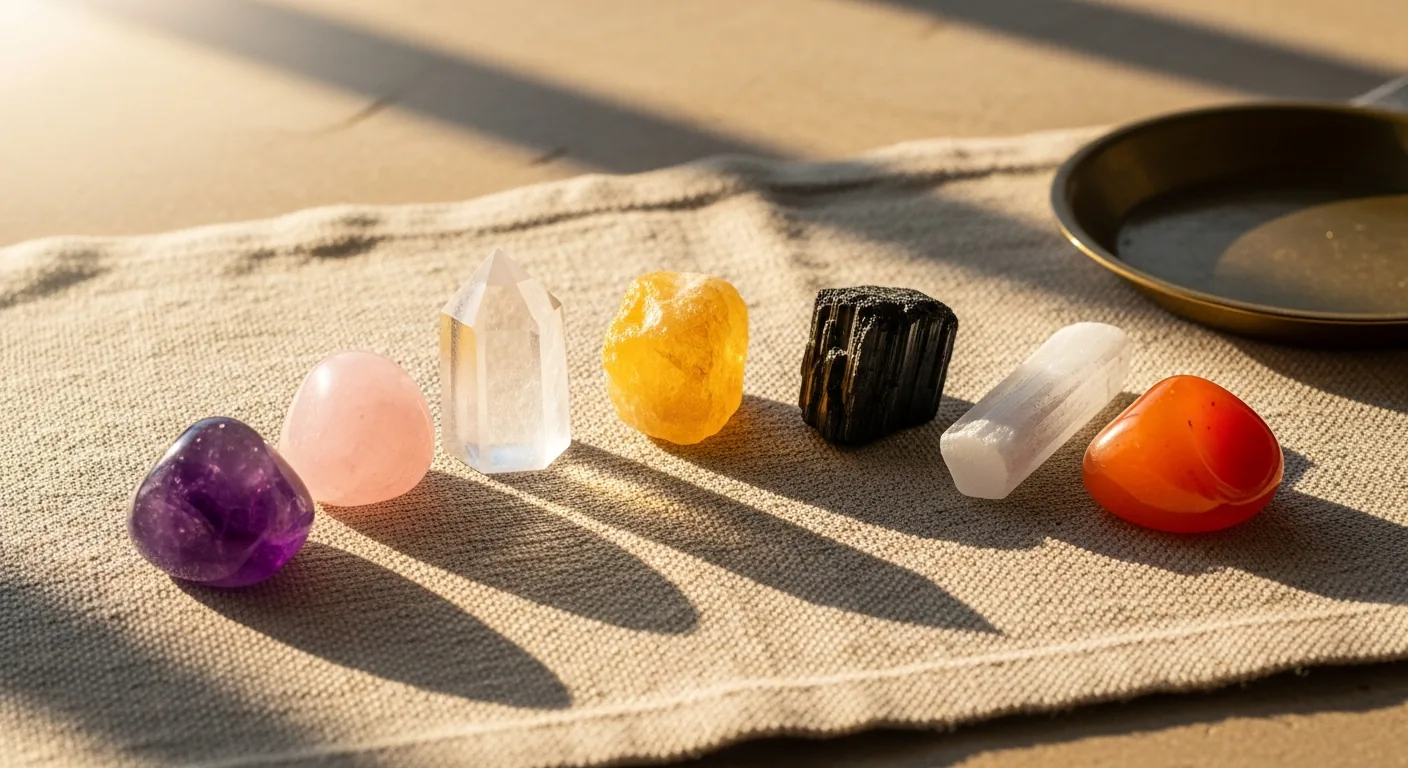
- Clear quartz: The universal stone. Amplifies any intention, pairs well with everything, and teaches you the basics of programming a crystal with purpose. If you could only ever own one crystal, this would be it.
- Amethyst: The calming stone. Perfect if you deal with stress, trouble sleeping, or an overactive mind. Its purple beauty also makes it the crystal most people fall in love with visually.
- Rose quartz: The heart stone. Ideal if you are going through emotional difficulty, want to cultivate more self-compassion, or are simply drawn to its gentle pink warmth.
- Citrine: The confidence stone. Choose this if you need a motivational boost, are starting a new project, or want to feel more personally empowered.
- Black tourmaline: The protection stone. Best if you feel energetically sensitive, easily overwhelmed in crowds, or want a strong grounding anchor.
What to Avoid as a Beginner
Starting a crystal practice should be simple and enjoyable. Here are the most common beginner mistakes and how to sidestep them:
- Buying too many stones at once. Start with one or two. Learn how they feel, how you like to use them, and what they bring to your daily routine before expanding. A small, intentional collection is far more powerful than a cluttered shelf of stones you never touch.
- Overspending. Your first crystal does not need to be expensive. A tumbled amethyst or rose quartz costs a few euros and works just as well as a large specimen. Size does not determine effectiveness — intention does.
- Ignoring your instinct. If a crystal guide says you "should" use citrine but you keep reaching for labradorite, go with labradorite. Guides are suggestions, not prescriptions. Your connection to the stone matters more than any list.
- Expecting instant results. Crystals support gradual shifts in awareness and intention. They are not magic pills. Give yourself a few weeks of consistent use — carrying your stone, meditating with it, placing it by your bed — before deciding whether it is working for you.
- Forgetting to cleanse your crystal. New crystals have been handled by many people before reaching you. Cleansing removes residual energy and sets a fresh starting point. Running water, moonlight, smoke from sage or palo santo, or placing your stone on a selenite plate are all simple cleansing methods.
How to Start Working with Your First Crystal
Once you have chosen your stone, here is a simple three-step process to begin:
- Cleanse it. Hold your crystal under cool running water for 30 seconds (check that your stone is water-safe first — selenite and lepidolite are not). Alternatively, leave it in moonlight overnight or pass it through sage smoke.
- Set an intention. Hold the crystal in both hands, close your eyes, and state your intention silently or aloud. Be specific: "I intend to feel calm and grounded during stressful workdays" is stronger than "I want good vibes." The crystal becomes a physical anchor for that intention.
- Keep it close. Carry it in your pocket, place it on your desk, sleep with it on your nightstand, or hold it during a five-minute morning meditation. The more consistently you interact with your crystal, the stronger the association between the stone and the state of mind you are cultivating.
Frequently Asked Questions
Can you choose the wrong crystal?
No. There is no wrong crystal to start with. Every stone has beneficial properties, and the one you feel drawn to is the right one for you at this moment. Your needs will change over time, and so will the crystals that call to you. Trust the process and start with whatever genuinely interests you — you can always add more stones later.
How many crystals should a beginner buy?
One to three is the ideal starting range. Beginning with a single stone lets you build a real relationship with it — learning how it feels, how you like to use it, and what shifts you notice over time. Once you feel comfortable with your first crystal, you will naturally know when you are ready to add another.
Do crystals actually work?
Crystals have measurable physical properties like piezoelectricity and stable molecular vibrations. Whether their wellness benefits come from these properties, from the mindfulness rituals surrounding them, or from both, is a matter of personal experience. What psychology research consistently confirms is that intentional rituals with focal objects reduce stress and improve well-being.
Should I buy crystals online or in person?
Both work well, though in-person shopping has the advantage of letting you hold and feel each stone. If buying online, look for sellers who photograph their actual inventory rather than stock images, and read the stone descriptions carefully. Trust the visual pull you feel — the crystal you keep returning to on screen is likely the right one for you.
How do I know if a crystal is real?
Buy from reputable sellers who can tell you where their stones are sourced. Real crystals feel cool to the touch and are heavier than glass or plastic imitations. Common fakes include dyed agate sold as exotic stones and glass sold as obsidian. If a price seems too good to be true for a rare stone, it probably is. Stick to well-known crystals like quartz, amethyst, and rose quartz for your first purchase — they are abundant and rarely faked.